


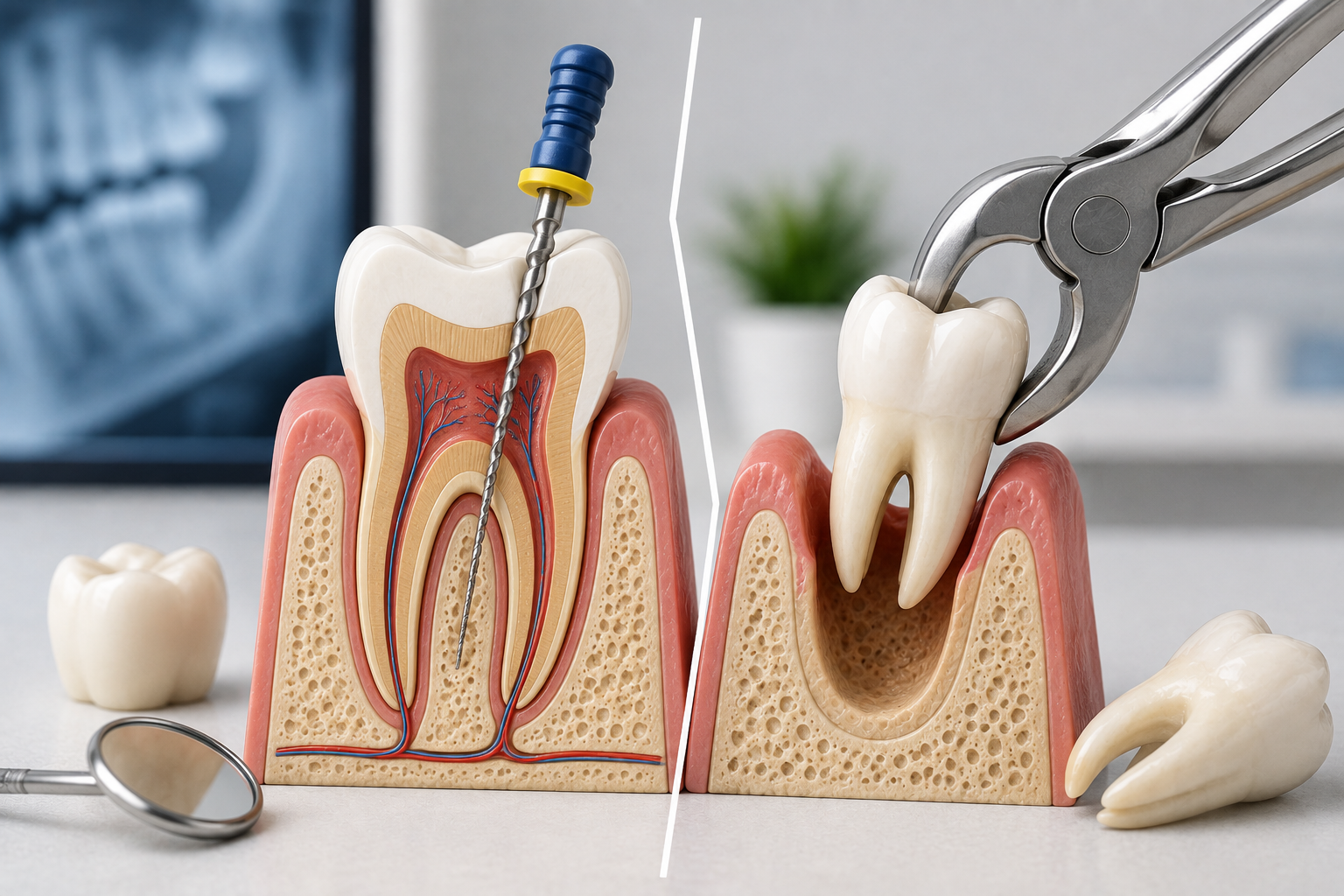
Root Canal vs Tooth Extraction: Which Is Better?
One of the most common questions patients ask after being diagnosed with a severely damaged or infected tooth is:
"Should I get a root canal or simply remove the tooth?"
It's a valid question. At first glance, tooth extraction may seem like the quicker and more affordable option. However, removing a natural tooth can have long-term consequences that many people don't consider.
Modern dentistry focuses on preserving natural teeth whenever possible. A root canal treatment (RCT) can often save an infected tooth, eliminate pain, and restore normal function without removing the tooth.
On the other hand, there are situations where a tooth is too badly damaged to be saved. In such cases, extraction may be the safest and most effective solution.
If you're trying to decide between these two treatments, this guide explains everything you need to know—from the procedure and cost to recovery, benefits, and long-term outcomes.
What is Root Canal Treatment?
Root Canal Treatment (RCT) is a procedure used to save a tooth when the pulp—the soft tissue containing nerves and blood vessels inside the tooth—becomes infected or inflamed.
Instead of removing the tooth, the dentist carefully removes the infected pulp, disinfects the root canals, fills them with a special material, and seals the tooth. In most cases, a dental crown is placed afterward to strengthen and protect the treated tooth.
Common Reasons for Root Canal Treatment
- Deep tooth decay
- Cracked or fractured tooth
- Dental trauma
- Repeated dental procedures on the same tooth
- Severe tooth infection
- Dental abscess
The biggest advantage of a root canal is that it allows you to keep your natural tooth, which is always the preferred option whenever possible.
What is Tooth Extraction?
Tooth extraction is the complete removal of a tooth from its socket in the jawbone.
Dentists usually recommend extraction only when a tooth cannot be restored or when keeping it could affect your overall oral health.
There are two types of tooth extraction:
Simple Extraction
Performed on teeth that are visible above the gum line. It is usually completed under local anaesthesia.
Surgical Extraction
Required when the tooth is broken below the gum line, impacted, or difficult to remove. This procedure may involve making a small incision in the gums.
After extraction, patients often require a replacement such as a dental implant, bridge, or denture to restore function and prevent bone loss.
Root Canal vs Tooth Extraction: Quick Comparison
| Feature | Root Canal Treatment | Tooth Extraction |
|---|---|---|
| Purpose | Saves the natural tooth | Removes the damaged tooth |
| Tooth Preservation | ✅ Yes | ❌ No |
| Procedure Time | 1–2 visits | Usually one visit |
| Pain During Procedure | Minimal (under anaesthesia) | Minimal (under anaesthesia) |
| Recovery Time | 2–5 days | 5–10 days |
| Need for Replacement | No | Usually Yes |
| Long-Term Cost | Lower | Higher if replacing the tooth |
| Jawbone Preservation | Excellent | Bone loss may occur over time |
| Appearance | Natural | Replacement often required |
At first glance, extraction may appear less expensive. However, once the cost of replacing the missing tooth is added, preserving the natural tooth with a root canal is often the more cost-effective solution.
When is Root Canal the Better Option?
A dentist will usually recommend a root canal when the tooth can still be saved.
You may be a good candidate if:
- The infection is limited to the pulp.
- The tooth structure is strong enough to support a crown.
- There is sufficient healthy bone around the tooth.
- The tooth is important for chewing or aesthetics.
- The surrounding gums are healthy.
Saving your natural tooth has several advantages. It allows you to chew normally, maintains the alignment of neighbouring teeth, and helps preserve the jawbone.
Modern root canal procedures are highly successful, with success rates exceeding 90–95% when performed correctly and followed by proper restoration.
Benefits of Root Canal Treatment
1. Preserves Your Natural Tooth
Nothing functions quite like your own natural tooth. A root canal allows you to keep it instead of replacing it.
2. Prevents Jawbone Loss
When a tooth is extracted, the jawbone in that area gradually shrinks because it no longer receives stimulation from the tooth root.
Keeping the natural tooth helps maintain bone density and facial structure.
3. Better Chewing Ability
A treated tooth continues to function normally, allowing you to eat your favourite foods without difficulty.
4. More Natural Appearance
After placing a ceramic or zirconia crown, the treated tooth blends seamlessly with the rest of your smile.
5. Long-Term Cost Savings
Although a root canal may initially cost more than an extraction, it often becomes the more economical option because you usually don't need a dental implant, bridge, or denture afterward.
When is Tooth Extraction Necessary?
Although dentists prefer saving natural teeth whenever possible, extraction becomes the better choice in certain situations.
A tooth may need to be removed if:
- It has fractured below the gum line and cannot be restored.
- There is severe bone loss due to advanced gum disease.
- Extensive decay has destroyed most of the tooth structure.
- A vertical root fracture makes the tooth non-restorable.
- The tooth is severely impacted, such as wisdom teeth.
- Orthodontic treatment requires creating space.
- The infection is too extensive to be successfully treated with a root canal.
In these cases, extraction helps eliminate pain, prevent the spread of infection, and protect neighbouring teeth.
Root Canal vs Tooth Extraction: Cost Comparison
One of the biggest factors influencing a patient's decision is the treatment cost. At first glance, a tooth extraction usually appears less expensive than a root canal treatment. However, it is important to consider the long-term cost, not just the initial expense.
Average Cost in Greater Noida
| Treatment | Approximate Cost |
|---|---|
| Root Canal Treatment | ₹3,000 – ₹8,000 |
| Dental Crown (Recommended after RCT) | ₹3,000 – ₹18,000 |
| Tooth Extraction | ₹1,000 – ₹8,000 |
| Dental Implant (after extraction) | ₹25,000 – ₹60,000 |
| Dental Bridge | ₹8,000 – ₹30,000 |
What does this mean?
If you choose tooth extraction without replacing the missing tooth, you may experience jawbone loss, shifting of nearby teeth, and difficulty chewing. If you later decide to replace the missing tooth with a dental implant, the total cost becomes significantly higher than preserving the natural tooth with a root canal.
In most cases, saving a healthy natural tooth is the better long-term investment.
Which Procedure Hurts More?
This is perhaps the most common concern among dental patients.
Does a Root Canal Hurt?
Modern root canal treatment is virtually painless. With advanced local anaesthesia and modern dental techniques, most patients report that the procedure feels similar to getting a routine dental filling.
You may experience mild tenderness for a day or two after treatment, but this is usually controlled with prescribed medication.
Does Tooth Extraction Hurt?
Tooth extraction is also performed under local anaesthesia, so the procedure itself is generally painless. However, because the tooth is removed completely, patients often experience:
- Swelling
- Mild bleeding
- Soreness
- Difficulty chewing for a few days
Recovery after extraction is generally longer than after a root canal.
Winner for Comfort: Root Canal Treatment
Recovery Time: Root Canal vs Tooth Extraction
Recovery varies depending on the complexity of the procedure and your overall oral health.
| Factor | Root Canal | Tooth Extraction |
| Return to Normal Activities | Same day or next day | 2–3 days |
| Mild Discomfort | 1–3 days | 3–7 days |
| Complete Healing | A few days | Several weeks for the socket to heal |
Most patients resume work or normal daily activities within 24 hours after a root canal, whereas extraction may require more rest and post-operative care.
Long-Term Impact on Oral Health
Choosing between a root canal and an extraction isn't just about treating today's pain—it also affects your oral health for years to come.
Advantages of Saving Your Natural Tooth
A root canal helps:
- Maintain natural chewing ability
- Preserve jawbone strength
- Prevent neighbouring teeth from shifting
- Maintain proper bite alignment
- Preserve your natural smile
Because the tooth root remains in place, the jawbone continues to receive stimulation during chewing, reducing the risk of bone loss.
What Happens After Tooth Extraction?
When a tooth is removed and not replaced, several long-term changes can occur:
Jawbone Shrinkage
The jawbone begins to lose density because it no longer receives stimulation from the tooth root.
Shifting Teeth
Nearby teeth may gradually move into the empty space, leading to bite problems and difficulty cleaning between teeth.
Difficulty Chewing
Missing teeth can reduce chewing efficiency and make eating certain foods uncomfortable.
Changes in Facial Appearance
Significant bone loss over time can contribute to a sunken facial appearance, making a person look older.
This is why dentists often recommend replacing an extracted tooth with a dental implant, bridge, or denture.
Root Canal vs Extraction: Which One Lasts Longer?
Many patients assume that removing the tooth is a permanent solution. However, a well-treated root canal tooth can also last for decades.
Root Canal
- Can last 15–20 years or longer
- May last a lifetime with good oral hygiene and a properly fitted crown
Tooth Extraction
Although the damaged tooth is removed permanently, the missing tooth usually needs replacement to restore normal function. A dental implant is an excellent replacement but involves additional treatment time and cost.
When possible, preserving your natural tooth remains the preferred option.
Common Myths About Root Canal Treatment
Myth 1: Root Canal Treatment is Extremely Painful
Fact: Modern root canal treatment is comfortable and is designed to eliminate pain—not cause it.
Myth 2: Tooth Extraction Is Always Better
Fact: Dentists always try to save a natural tooth whenever possible because it offers the best long-term outcome.
Myth 3: Root Canal Treatment Causes Illness
Fact: This is a common misconception based on outdated information. Modern root canal treatment is a safe, evidence-based procedure with a high success rate.
Myth 4: Once a Tooth Hurts Less, Treatment Is No Longer Needed
Fact: Pain may decrease when the nerve inside the tooth dies, but the infection can continue to spread. Delaying treatment can lead to abscesses, bone loss, and more complex procedures.
When Should You Visit a Dentist Immediately?
Do not ignore dental pain if you experience:
- Severe toothache
- Swelling around the gums or face
- Sensitivity to hot or cold that lasts several seconds
- Pain while chewing
- Pus discharge from the gums
- A broken or fractured tooth
- Persistent bad breath caused by infection
Early treatment often allows the tooth to be saved before extraction becomes necessary.
Frequently Asked Questions
Is a root canal better than tooth extraction?
In most cases, yes. Saving your natural tooth is generally the best option because it preserves normal function, protects the jawbone, and avoids the need for replacement.
Is root canal treatment permanent?
Root canal treatment has a very high success rate. With proper oral hygiene and a well-fitted crown, the treated tooth can last for many years or even a lifetime.
Why do dentists recommend a crown after a root canal?
A root canal-treated tooth becomes more brittle over time. A crown helps protect it from fractures and restores strength and function.
What happens if I don't replace an extracted tooth?
The surrounding teeth may shift, the jawbone can shrink, chewing becomes less efficient, and your bite may change over time.
Which treatment is more affordable?
While tooth extraction usually has a lower upfront cost, adding the cost of a dental implant or bridge often makes it more expensive than saving the natural tooth with a root canal.
Can every infected tooth be saved with a root canal?
No. If the tooth is severely fractured, has extensive bone loss, or cannot be restored, extraction may be the better option.
Expert Recommendation
Every dental case is unique, so the right treatment depends on the condition of your tooth, surrounding bone, and overall oral health.
However, the general principle in modern dentistry is simple:
If the tooth can be saved, it should be saved.
Root canal treatment allows you to preserve your natural tooth, maintain proper chewing function, protect the jawbone, and avoid more extensive restorative procedures.
Extraction should be considered only when the tooth cannot be restored or when keeping it could compromise your oral health.
A thorough clinical examination and digital X-rays or CBCT scan will help your dentist recommend the most appropriate treatment.
Conclusion
Choosing between a root canal treatment and tooth extraction is an important decision that affects both your immediate comfort and your long-term oral health.
While extraction may seem like the faster or less expensive option initially, it often leads to additional treatment, such as dental implants or bridges, to restore the missing tooth.
Whenever possible, preserving your natural tooth through a root canal is the preferred choice because it maintains your smile, supports jawbone health, and provides long-lasting function.
If you are experiencing persistent tooth pain, swelling, or sensitivity, don't delay treatment. Early diagnosis can often mean the difference between saving a tooth and losing it.
Visit Smylo Dental & Implant Center
If you're unsure whether you need a root canal treatment or tooth extraction, our experienced dental team at Smylo Dental & Implant Center is here to help.
We use advanced diagnostic technology to assess your condition and recommend the most suitable treatment based on your individual needs. Our goal is always to preserve your natural teeth whenever possible while ensuring comfortable, high-quality dental care.
Book your consultation today and take the first step towards a healthier, pain-free smile.
For more information:
https://smylodental.com/root-canal
https://smylodental.com/tooth-extraction
Book Your Appointment
We'll confirm your appointment at the earliest
 Whatsapp Us