


About Tooth Extraction
Tooth extraction is the removal of a tooth from its socket in the jawbone. While saving a natural tooth is always the first preference at Smylo Dental, there are circumstances where extraction is the best course of action — severely decayed teeth that cannot support a filling or crown, teeth damaged beyond repair from trauma, infected teeth that are not amenable to root canal treatment, teeth causing crowding in an orthodontic treatment plan, or severely broken teeth whose roots cannot be restored.
At Smylo Dental, extractions are performed under effective local anaesthesia by experienced dentists and oral surgeons. The procedure is carefully planned using X-rays to understand the root anatomy and ensure the safest approach. Simple extractions (for fully erupted teeth) are typically completed in minutes. Surgical extractions (for broken or impacted teeth) require a more detailed approach but are equally well-managed.
Following every extraction, our team provides clear written post-operative instructions to support your recovery and minimise the risk of complications. We also discuss tooth replacement options with you — whether an implant, bridge, or denture — because leaving a gap has consequences for your bite and jawbone health over time.
How It Works
Clinical Assessment & X-Ray
A periapical X-ray reveals the root shape, bone levels, and any complicating anatomy. The dentist confirms the clinical indication for extraction and plans the procedure.
Local Anaesthesia
The area around the tooth is thoroughly numbed. The dentist confirms you cannot feel pain before proceeding. You will feel pressure during the procedure but no sharp pain.
Loosening the Tooth (Luxation)
The dentist uses elevators and periotomes to gently widen the socket and loosen the tooth's attachment to the surrounding bone before extraction.
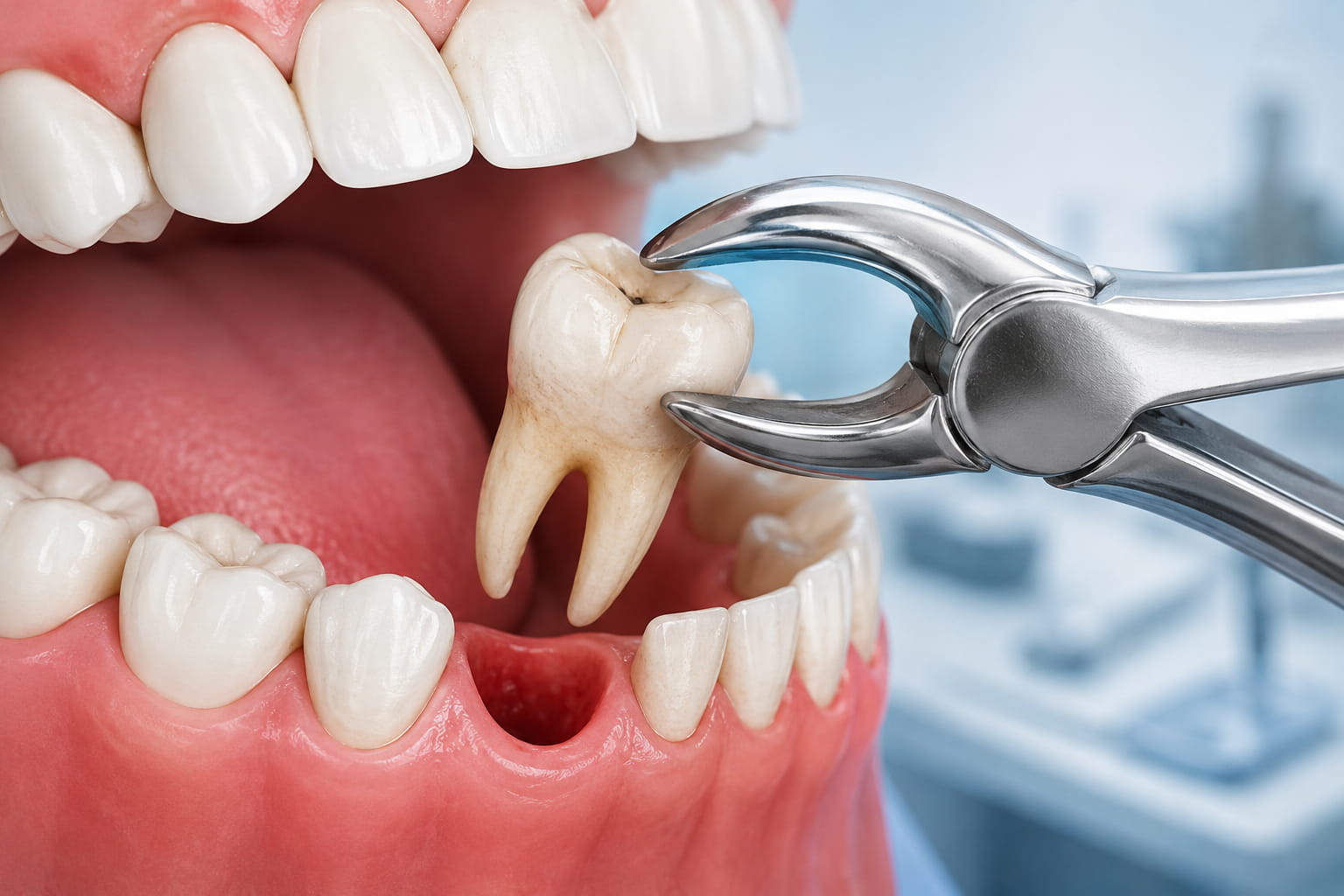
Extraction
Using forceps, the tooth is firmly and smoothly removed from the socket. For teeth with curved or multiple roots, gentle rocking motions are used to widen the socket.
Socket Care & Post-Op Instructions
Gauze is placed to control bleeding. A blood clot forms naturally to initiate healing. Detailed post-operative instructions covering diet, medication, and warning signs are provided.
Frequently Asked Questions
Common questions about Tooth Extraction at Smylo Dental.
With effective local anaesthesia, you will not feel pain during the extraction—only pressure as the tooth is loosened and removed. Post-operative soreness for 1–3 days is normal and managed with prescribed pain relief.
A simple extraction of a fully erupted tooth typically takes 15–30 minutes from anaesthesia to completion. Surgical extractions involving incisions or tooth sectioning take longer—your dentist will give you a time estimate at the consultation.
Soft foods are recommended for the first 48–72 hours—yoghurt, mashed potato, scrambled eggs, soup, and smoothies. Avoid hard, crunchy, spicy, or very hot foods for the first week. Do not use a straw, as the suction can dislodge the healing blood clot.
As soon as possible. Leaving a gap allows adjacent teeth to shift and the opposing tooth to over-erupt into the space. The jawbone in the extraction site also begins to resorb within months. Implants, bridges, and dentures all prevent these consequences—your dentist will discuss options at your follow-up visit.
Normal healing involves mild pain, swelling, and occasional light bleeding for 24–48 hours. See your dentist if you experience severe or worsening pain after day 3 (possible dry socket), fever, significant swelling that is increasing, or persistent heavy bleeding. Call Smylo Dental immediately if you are concerned.
 Whatsapp Us